OUR CHAPTER · CHAPTER # 1 · GALVESTON · SINCE 1891
It started with ten women, eight dollars, and a refusal.
In 1891, in a Galveston law library, two young cousins refused to let the men and women who made Texas free be forgotten. They founded the Daughters of the Republic of Texas — and named its very first chapter for the general credited with the cry, "Remember the Alamo!" This is that chapter's story. It is still being written.
1891 · the founding
Ten women. Eight dollars and thirty-five cents.
“Not on our watch”

It's 1891, in Galveston. Two cousins — Betty Ballinger and Hally Bryan — have spent the summer reading the histories of Texas in her father's law library. Betty's grandfather fought at San Jacinto. Hally descends from Moses Austin. They are daughters of the revolution, quite literally.
And they are alarmed. The men who made Texas free are growing old and dying, and no one seems to care. The graves of General Sidney Sherman and President David Burnet — two titans of the Republic — lie in an abandoned cemetery at the far end of the island, slowly being forgotten.
Betty looked at Hally. Hally looked at Betty. And they said: not on our watch.
On November 6, 1891, ten women gathered and organized what would become the Daughters of the Republic of Texas. The first chapter — Chapter No. 1 — was founded right here in Galveston, and named for a hero: the Sidney Sherman Chapter. Ten women, and $8.35 in the treasury. Watch what they did with it.
Sidney Sherman Chapter Charter Members
Miss Betty Ballinger
Mrs. William P. Ballinger
Miss Sophie Hill
Mrs. Carrie Franklin Kemp
Mrs. I. Leclere
Mrs. Marie Leclere Button
Mrs. J.M.O. Menard
Mrs. Lucy Ballinger Mills
Mrs. M.F. Mott
Mrs. Laura Ballinger Randall
1891-1894 · the first work
The first act was to bury our heroes properly.
Before anything else, they exhumed General Sherman and President Burnet from that abandoned cemetery and reinterred them with honor at Lake View Cemetery. Picture it: proper Victorian ladies in 1891 Galveston, and their very first chapter project is moving two bodies. Texas women have never been timid.
By 1894 they had raised the money to raise a monument over both graves — unveiled with an orator, a former governor, and the General's own granddaughter pulling the veil.
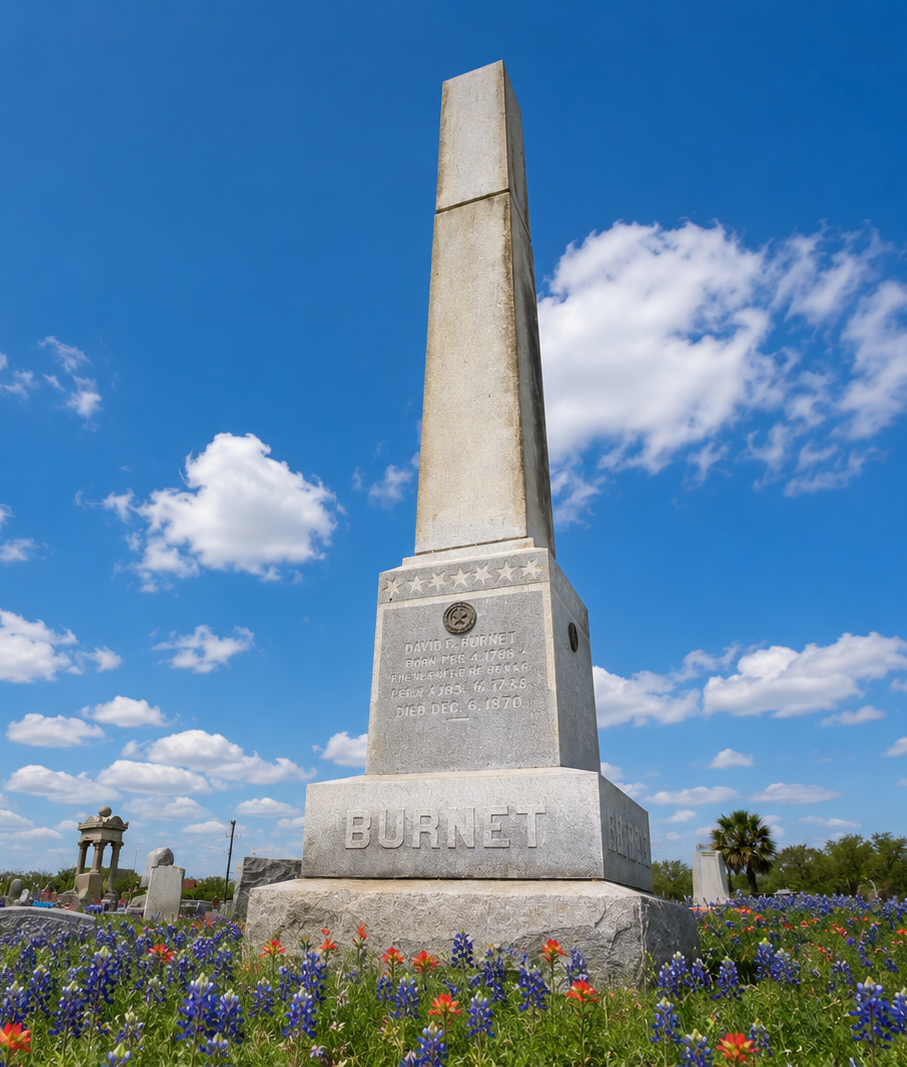
The monument they willed into being
1900 · 10,000 people
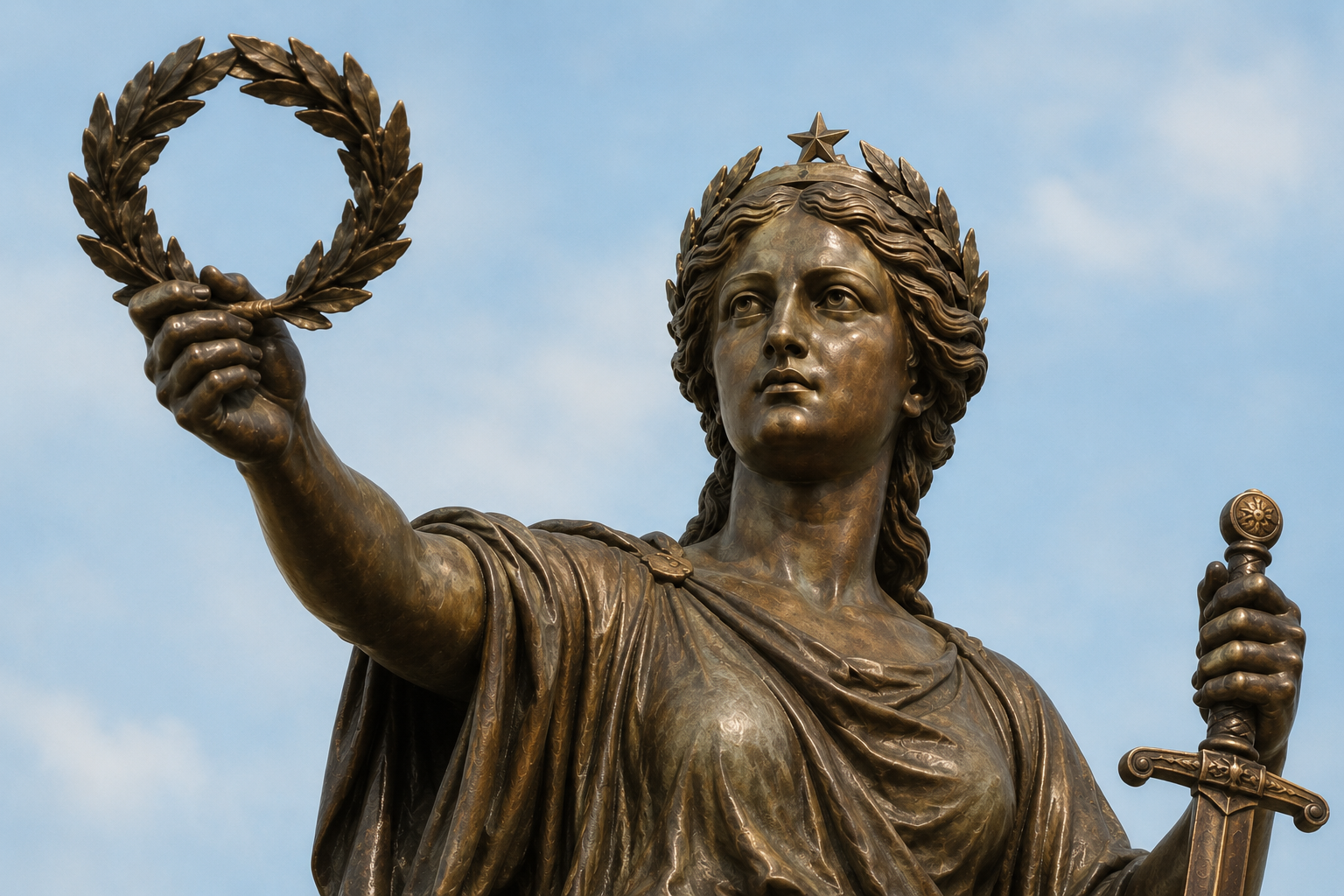
When Galveston's Henry Rosenberg died in 1893, his will left $50,000 (today approximately $1.5 million) for a monument to the heroes of the Texas Revolution. This chapter had planted that idea — and they knew it. They commissioned the leading sculptor of that era, New Hampshire granite as used in the Library of Congress, and a 74-foot design in bronze and stone. On April 21, 1900 — San Jacinto Day — they dedicated it before ten thousand people.
Four months later, the Great Storm killed thousands and nearly erased the island. The monument stood without a scratch. The chapter persevered. We have guarded it ever since.
more than a century of showing up
Building a legacy.
“The women in this chapter have always been the kind of women who show up — not because they’re asked to, but because they understand what’s worth protecting.”
-
Their most significant public moment: the dedication of the Henry Rosenberg Monument to the Texas Heroes on April 21, 1900 — the $50,000 bronze and granite tribute to the men who won Texas independence. Sidney Sherman Chapter had long anticipated this day. Their report was both joyful and regretful: the veterans themselves could not attend, but the Daughters were there.
"To the Veterans it must be gratifying to know that enduring granite and bronze, in beautiful and symbolic form, will speak to all future generations of the valor, honor, courage, and patriotism of that faithful band."
The chapter also had framed portraits of Stephen F. Austin and Sam Houston and presented them to the Ball High School Alumni Association for the school's assembly hall — where they hung for generations.
-
The Great Storm of September 8, 1900 — the deadliest natural disaster in American history — devastated Galveston and the chapter. Two members, Mrs. Woodward and Miss Ruth Martin Phelps, were lost. The first meeting afterward was held in November with only four members present.
The chapter did not stop.
Within the year, they re-erected the Sherman-Burnet monument (blown down in the storm) at a cost of $35. They took formal charge of the Rosenberg Texas Heroes Monument as a permanent stewardship responsibility. They organized Decoration Day ceremonies. They lobbied schools to observe Texas Independence Day and San Jacinto Day.
Then came their most extraordinary acquisition of the decade: the chapter secured a 20-foot square plot of land at the site of the first Capitol of the Republic of Texas at Columbia — donated by Col. W. L. Moody of Galveston. The old Capitol building had been destroyed in the storm, but the chapter obtained both the timber from the demolished building and the wood of the three great oak trees under whose branches the first Congress of Texas had met.
The timbers of the first Capitol of Texas were placed at the disposal of the Sidney Sherman Chapter, then given to the General Association.
By decade's end, they had partnered with other chapters on the Stephen F. Austin statue fund, raised nearly $370 from Galveston schools and citizens, and continued marking veterans' graves with marble stones.
-
The chapter's membership held steady, its meetings consistently well-attended. Monthly programs rotated through members' homes. Historical papers on Early Texas History were a staple.
The decade's defining moment came in November 1914, when the new USS Texas — the mighty battleship that would serve in two world wars — came to Galveston to receive a silver service from the children of Texas. Sidney Sherman Chapter was there, presenting gifts to the ship in honor of its name.
When the United States entered World War I, the chapter organized a Red Cross Unit and showed up — every Wednesday — to work. Their wartime production record was extraordinary:
171 towels hemmed. 157 rolls of muslin bandages. 885 gauze compresses. 983 gauze wipes. 10 sweaters. 9 pairs of socks. 3 complete layettes. 9 Christmas packages sent to soldiers. 42 new Red Cross members recruited in a single Christmas drive.
These were not women who sat out a crisis.
The chapter also protested — successfully — when plans emerged to convert the San Jacinto battlefield to commercial and amusement purposes. They sent an immediate protest to the Governor of Texas. The Governor responded: it would not be allowed.
-
The 1920s were a decade of ceremony, civic pride, and remarkable chapter personality.
At age 93, Mrs. Catherine Stubbs, Real Daughter, was still attending meetings, seated in her armchair, offering suggestions and telling stories of "olden days" that no one else alive could tell. "One of Sidney Sherman Chapter's proudest possessions," the Secretary called her.
The chapter launched a tradition of presenting a large Texas flag to one of Galveston's public and parochial schools every year on March 2nd — Texas Independence Day. Over the decade they gave flags to the Alamo School, San Jacinto School, Goliad School, Sam Houston School, the Y.W.C.A., the Ursuline Convent, the Sacred Heart Convent, and the German Lutheran School.
Major milestones of the decade:
1922: Championed the marking of West Columbia, site of the first Texas Capitol, with a bronze tablet — coordinating the effort across multiple DRT chapters.
1922: Planted maritime palms on Galveston Island as a town forest memorial to a pioneer Texan.
1922: Hosted a Texas Independence Day luncheon at the Galvez Hotel, inviting the daughter of Mirabeau B. Lamar, a daughter of General Sidney Sherman, Miss Betty Ballinger (co-founder of the DRT), and a charter member.
1923: Hosted the State DRT Convention in Galveston.
1924: Allowed the Boy Scouts of Galveston to use the Sherman monument at Lakeview Cemetery as a patriotic shrine during Patriotism Week.
1929: Received a gavel carved from wood taken from Jean Lafitte's Grove — presented by the son of the chapter president.
The chapter also survived a painful loss: $300 of their hard-earned Memorial Fund was lost when the People's Bank failed during the decade's economic tremors.
-
The 1930s were arguably the most consequential decade in the chapter's long history.
1932: A chapter member's great-grandson, Menard Keene, wore the actual dress uniform of General Sidney Sherman to the Sons of the Republic of Texas Pageant and Costume Ball in Houston — and won first prize.
1933: The chapter presented the captain of the USS Constitution — "Old Ironsides" — with a silver loving cup inscribed from Sidney Sherman Chapter during the historic ship's port visit.
1933: Chapter member Mr. Maco Stewart gifted the chapter Jean Lafitte's Grove — 300 feet square of historic Galveston land — where Lafitte's men had once battled the Karankawa Indians for control of the island.
1934: The chapter cleared, landscaped, and obtained a formal deed to Lafitte's Grove, turning it into a chapter park open to the public. Annual opening and closing meetings were held there as picnics.
1934: The chapter sponsored the unveiling of a monument to George C. Childress, the man chosen to write the Texas Declaration of Independence.
1935: The chapter promoted the sale of Texas Centennial maps across Galveston.
1936 — The Centennial Year: The chapter organized questions and answers on Texas History, printed three times a week for nine months in the Galveston Daily News. They sponsored sale of Centennial license plates, raising $40. They drew up resolutions to dedicate the new Galveston Bay Causeway to the Texas Navy — and took those resolutions to every civic and patriotic organization in the city. They organized a Chapter of the Sons of the Republic in May 1935. They placed Centennial markers for Gail Borden, Thomas Borden, Michael Menard, the first Galveston wharf, and Lafitte's Grove. They marked the grave of Mrs. Sidney Sherman and held impressive services — her only living daughter unveiled the marker.
And they mourned: Miss Betty Ballinger, co-founder of the DRT and longtime chapter member, died during the Centennial year.
1938: The chapter's crowning achievement of the decade — the rescue, relocation, and restoration of "The Cradle": the small library from the Ballinger home where the idea of the Daughters of the Republic of Texas was first conceived. The chapter moved the building to a city park, restored it, placed a bronze plaque designating it a State Shrine, and painted it white with a new fence. A silver tea raised $51.45 toward the work; other chapters contributed more.
The Cradle — the birthplace of the DRT — was saved by Sidney Sherman Chapter, No. 1.
-
War came again, and the chapter answered again.
Members reported to the Army Air Base to mend soldiers' uniforms and make alterations. They sent scrap books to Army and Marine hospitals for patients' use. They prepared cotton balls for occupational therapy at McCloskey General Hospital. They donated to the Red Cross. They furnished a Day Room for the 31st Battalion at Camp Wallace. They contributed to the USO Sunday Dinner program for enlisted men. They donated to the Greek clothing drive. They knitted. They sewed. Some members logged 75 to 80 hours in surgical dressings alone.
And on February 7, 1942, the chapter paused the war work long enough to celebrate its 50th Anniversary — held at the home of charter member Mrs. Edward Randall Sr. Two extraordinary guests attended: Mrs. Hallie Bryan Perry, one of the co-founders of the DRT, and Mrs. Carrie Franklin Kemp, a charter member of the chapter. The women who had started it all were still present to mark the milestone.
Post-war, the chapter obtained and restored an old cannon, mounted it, and placed it in front of the Sidney Sherman monument on Broadway.
In 1949, the chapter installed a historic Navy cannon — located when the new Galveston airport was built, similar to an 1814 model — on a specially built carriage made to Naval Academy specifications, dedicating it with impressive ceremony before the chapter's first fall meeting.
The decade also saw the chapter send 40 pounds of candy to war orphans in Japan — and then hosted the Japanese woman who had distributed it, who came in person to thank them.
The chapter closed the 1940s still giving Texas flags to schools, still placing flags on veterans' graves on March 6th, still studying the Presidents and Governors of the Republic, still meeting in members' homes, still serving.
Fifty-eight years in, they showed no signs of stopping.
we’re just getting started
Still writing our story.
135 years after those first Daughters gathered in Galveston, the Sidney Sherman Chapter continues to meet, serve, teach, and grow. The names and the meeting places have changed. The mission has not.
If your ancestor stood with the Republic of Texas — we may be the chapter where you've always belonged.
-
On a November evening in 1891, ten women gathered at the Galveston home of Mrs. J. M. O. Menard — daughter of General Sidney Sherman himself — and did something no women in Texas had done before. They organized the very first chapter of the Daughters of the Republic of Texas.
They named it Sidney Sherman Chapter, No. 1, in honor of one of the three commanders at the Battle of San Jacinto, the man whose battle cry "Remember the Alamo!" rallied the charge that won Texas its independence.
Officers elected that night. Dues were set at one dollar a year. The second Tuesday of every month was established as meeting day — held in Mrs. Menard's parlor.
Within weeks, they had already chosen their first mission: rescuing the neglected graves of President David G. Burnet and General Sidney Sherman from an abandoned cemetery on the far end of Galveston Island.
Thirty-five members enrolled in the first year. The chapter was just getting started.
-
The chapter hit its stride. Under reorganized leadership — Miss Betty Ballinger as President, Mrs. M. F. Mott as Vice President, Mrs. C. L. Kemp as Secretary — membership climbed to 35 active members.
Their first major accomplishment: the chapter successfully arranged the removal and reinterment of the remains of President David G. Burnet and General Sidney Sherman from an abandoned, overgrown cemetery to a proper donated lot at Lakeview Cemetery. General Sherman's family covered the cost of his reinterment; the chapter covered the rest.
The memorial fund already held several hundred dollars — raised through entertainments and donations — earmarked for a future monument to these two fathers of Texas.
Lakeview Cemetery donated the lot. The work was done. The heroes were home.
-
Ten new members joined, bringing total membership to 42. The chapter reported that active measures were underway to recruit every eligible woman in Galveston.
Fundraising was serious work: $575.30 raised through dues, entertainments, and donations. After expenses — $90.50 for cemetery work, postage, and supplies — the treasury held $482.60, a substantial sum for 1893.
The chapter's cemetery work continued in earnest. Meetings were well attended. Interest was high. The Proceedings Secretary noted: "Much interest manifested."
The women of Sidney Sherman Chapter were building something that would last.
-
This was the year the chapter made history.
On March 2, 1894 — Texas Independence Day — Sidney Sherman Chapter unveiled a monument over the graves of President David G. Burnet and General Sidney Sherman at Lakeview Cemetery. The ceremony was impressive by any measure:
The orator: Hon. Norman G. Kittrell delivered what was called an eloquent and patriotic address.
Ex-Governor Lubbock shared personal reminiscences of early Texas.
The unveiling: performed by Miss Sue Sherman Menard, granddaughter of General Sherman, and a member of the chapter.
Attendees: the Mayor, City Council, military organizations, and three sister DRT chapters — San Jacinto (Houston), W. B. Travis (Austin), and Stephen F. Austin (Brazoria).
Membership had grown to 53, with 40 fully qualified.
The Secretary closed her report with a remarkable observation: Henry Rosenberg had just announced a $50,000 bequest to erect a monument to the heroes of the Texas Revolution in Galveston. She credited the Daughters' work with planting the idea in his mind.
"We have every reason to believe that the organization and efforts of the Daughters of the Republic at least suggested to him the idea of this splendid testimonial."
-
The chapter published a memorial pamphlet commemorating the monument unveiling — containing the full text of Judge Kittrell's oration and the proceedings of the ceremony. Cost: $55.55. Copies were distributed to Texas veterans, sister chapters, and libraries across the state.
Seventeen dollars came back in pamphlet sales. The rest was given away — because the story deserved to be told.
The chapter held two successful fundraising entertainments, hosted in the private homes of members Mrs. Walter Gresham and Mrs. G. H. Mensing. The cemetery lot at Lakeview was carefully maintained. A committee was appointed to secure grave markers specifically identifying the burial sites of President Burnet and General Sherman.
Qualified membership: 44.
-
The chapter placed granite markers on the graves of both President Burnet and General Sherman at a cost of $40 — permanent, carved stone identification of two of Texas's most important men.
Membership held at 47, and the chapter joined with the Galveston Historical Society to celebrate Texas Independence Day. Then came the crowning event of the year: the entire DRT and Texas Veterans' annual reunion was held in Galveston at the invitation of Sidney Sherman Chapter — making the chapter the host of the state organization's most important gathering.
-
The chapter showed its ambitions extended far beyond Galveston.
When the USS Texas visited port, Sidney Sherman Chapter voted to present three pieces of silver to the battleship, engraved as a gift from the Daughters of the Republic of Texas — so that wherever the ship sailed, it would carry proof of Texas women's love and loyalty.
The silver service was presented by Mr. Eugene Hawkins on February 19th during the ship's Galveston visit.
The chapter also hosted the annual DRT and Texas Veterans reunion for a second consecutive year — organizing a full two-day event including a business meeting, a street parade through downtown Galveston (with veterans, Daughters, and schoolchildren marching together), a memorial service at First Presbyterian Church, a public oration by Judge M. E. Kleberg at Harmony Hall, and an evening reception at the home of Mrs. Walter Gresham.
Monthly programs now included literary readings on Early Texas History, with members preparing and presenting original papers.
-
On March 5, 1899 — Decoration Day — a band of chapter members gathered at Lakeview Cemetery and placed small Texas flags and wreaths of ivy and dried flowers on the graves of the men who had built the Republic.
Among those present was little Dorothy Eichlitz, just four years old — already learning that these graves mattered, that these names mattered, that this work mattered. The Secretary noted: "Thus are we early training our children who are to take up the work when we have passed away."
The chapter also organized one of its most elegant events: a reception at the Artillery Club Rooms — yes, the very same Artillery Club — in honor of Commodore Philip and the officers of the Battleship Texas and visiting legislators. Despite freezing weather and the bay having iced over, it was described as "one of the most elegant affairs ever given in Galveston."
The chapter also took on a new mission: marking the graves of Republic-era veterans with small marble slabs, so future generations could identify them. The chapter was promised a remarkable relic — a sword worn by an officer at the Battle of San Jacinto.
The Chapter’s most significant public moment: the dedication of the Henry Rosenberg Monument to the Texas Heroes on April 21, 1900 — the $50,000 bronze and granite tribute to the men who won Texas independence. Sidney Sherman Chapter had long anticipated this day. 10,000 people attended.
"To the Veterans it must be gratifying to know that enduring granite and bronze, in beautiful and symbolic form, will speak to all future generations of the valor, honor, courage, and patriotism of that faithful band."
-
When the City of Galveston proposed rerouting Broadway around the Texas Heroes Monument, the Sidney Sherman Chapter went on record in opposition. The monument stayed.
When nearly one hundred people showed up to the chapter's Silver Tea at Menard Park — in bad weather — the proceeds went straight to The Cradle. When every public and parochial school in Galveston needed a Texas flag, this chapter supplied them. When Texas heroes lay buried across the city's cemeteries without recognition, chapter members walked those grounds every March 6th and placed a flag on every grave.
The chapter also paid the annual upkeep on the cemetery lot at Lakeview where President David G. Burnet is buried — a quiet, decades-long act of guardianship that no one asked them to do.
-
The chapter launched a two-year research project to survey, document, and record every Texas Republic hero buried in Galveston County cemeteries — roughly 78 graves — and placed Texas flags on each one every March 6th without fail.
Members supplied hostesses for the newly restored Samuel May Williams home, opening a piece of Republic-era Galveston to the public. The chapter dedicated the year to rigorous historical programming on the Republic era, and brought in distinguished outside scholars to make the case that Texas history belongs to everyone — not just those with the lineage to prove it.
A state marker was dedicated on the grave of former DRT President General Mrs. Paul Lobit, arranged by chapter members. The Texas State Historical Survey Committee awarded The Cradle an Official Historical Building Medallion — a recognition the chapter had worked toward for years.
-
The Mary Moody Northen Foundation donated $15,500 for the full restoration of The Cradle — and this chapter was the reason anyone was paying attention. By March 1975, the work was done. The chapter held its meeting inside The Cradle for the first time in years: a luncheon in the room where the DRT was born.
The chapter arranged for a flagpole to be erected on the Cradle grounds and dedicated it to Mildred Cherry, who had served as Cradle Chairman from 1937 to 1971. A commemorative plaque was hung inside. The chapter also raised funds through the sale of Lone Star drama tickets — every dollar earmarked for the Cradle Fund — and one December, members stuffed and mailed over 3,700 fundraising envelopes by hand.
The chapter recommended one of its own for Fifth Vice President General of DRT. She was elected.
-
Members spent years researching and writing forty original biographies of Texas heroes buried on Galveston Island. The result: Texas Heroes and Patriots Buried on Galveston Island — a publication that earned Honorable Mention at the Texas State Historical Commission Annual Conference and is still referenced today.
When Hurricane Alicia destroyed the oleanders at The Cradle, the chapter partnered with the National Oleander Society to replant them. When the Moody Mansion opened as a museum, the chapter participated in the dedication of its Texas Historical Commission Marker — because the late Mrs. Mary Moody Northen had been a Sidney Sherman member since 1940.
The chapter hosted the 92nd Annual DRT State Convention at the Moody Convention Center in Galveston, managing every detail in-house. It was not the first time, and it would not be the last.
-
The chapter's centennial year came and went without slowing down.
In 1992, chapter president Mrs. David H. Peterson received the Mamie G. Cox Award — the DRT's premier recognition for historical writing — for her essay on Bolivar Peninsula's overlooked role in early Texas.
In 1997, the chapter convinced seven Galveston County mayors to officially proclaim Texian Navy Day in their cities. Nine members appeared in separate newspaper photos across the county on the same day.
In 1998, the chapter placed new Defender and Citizen grave markers at the burial sites of General Sidney Sherman and President David G. Burnet at Lakeview Cemetery — a ceremony years in the making, held during a District IX Workshop at the historic Hotel Galvez.
That same decade, a chapter member funded the restoration of a historic cannon owned by the chapter. It stood at the Texas Seaport Museum and beside the Sidney Sherman statue on Broadway before coming home to the Cradle. .
The chapter placed its complete historical records — every proceeding, every president — in the Special Collections of the Rosenberg Library. So nothing would be lost.
-
In 2004, the chapter member who funded the cannon restoration received the Governor's Yellow Rose of Texas Award — presented by Governor Rick Perry — along with the DRT's own Bluebonnet Award and Pin. She had earned every one.
That same year, the chapter hosted the 112th DRT State Convention in Galveston — the second time in its history it had brought the full organization home to the island. Members logged 4,233 volunteer hours in a single year.In 2005, the Sidney Sherman Chapter was formally recognized at the Centennial Celebration at the Alamo as the founding chapter of the DRT. One hundred and fourteen years after its charter, the organization came back to acknowledge where it began.
-
The chapter fenced and secured LaFitte's Grove — two acres of historic Galveston property the chapter has owned since 1933 — using a Native Texas License Plate grant and private donations. In 2017, a member donated $2,500 to help maintain it.
Membership climbed from 61 to 80 over the decade, with the chapter averaging more than 25 members per meeting. The chapter launched a Facebook page, modernized its yearbook, and never stopped showing up.Member Catherine Polk took the "Texas Trunk" — a hands-on living history program — into as many as 27 schools and community groups in a single year, every year for a decade, bringing Republic-era Texas to life for thousands of Galveston County children who might never otherwise encounter it.
In 2018, the chapter donated cuttings from the Alamo Tree and the Treaty Oak to the Rosenberg Library, each mounted with a concrete commemorative plaque. Two of the most storied trees in Texas history now grow in Galveston — because this chapter put them there.
Seven Galveston County mayors declared Texian Navy Day. The chapter attended the 125th anniversary of the Texas Heroes Monument on Broadway. Members joined the SRT at the annual Sidney Sherman dinner. The chapter gave to the Bryan Museum collection and contributed to every DRT entity — year after year.
-
The chapter found a meeting place at the Bryan Museum in Galveston — in person, always — and the results were immediate. Seventeen new members were installed in a single year. Membership grew 15%.
In 2024, the chapter hosted the District IX Workshop at the Bryan Museum, drawing more than 80 attendees from four other districts. One member made a personal donation toward the DRT Memorial being established in Washington, D.C.
Then came the chapter's most meaningful achievement in decades: the founding of the Juana Navarro Alsbury Chapter of the Children of the Republic of Texas — named for the Tejana heroine who sheltered women and children inside the Alamo. Nine children accepted. The new chapter received the CRT's highest recognition in its very first year.
One family in the combined membership spans four living generations — great-grandmother, grandmother, mothers, and children — all active members together.
your turn
This is your turn.
We are descended from people who did not quit. They fought, they built, they preserved — and handed it to the next generation with two words: your turn.
Hally Bryan Perry, who started it all, was remembered as living "in the eternal now." So does this work — in every marked grave, every child who learns what San Jacinto means, every woman who claims her place. The Sidney Sherman Chapter has answered the call since 1891.